Put on a good City Pop record and the first thing you notice may not be the songwriting. It may be the space.
The bass moves
The bass moves.The drums stay dry and controlled. A guitar phrase appears for two bars and disappears. The electric piano never seems to fight the vocal, even when the arrangement is dense. Everything has a place.
That sense of order is one of the reasons the best City Pop records still sound so expensive.
It was not simply a matter of taste. By the late 1970s and early 1980s, Japanese studios were operating at an unusually high level, with better multitrack equipment, highly experienced engineers and a deep pool of session musicians who could move easily between jazz, fusion, funk, soul, rock and commercial pop. Tatsuro Yamashita has described how quickly the recording environment changed around him, from relatively limited setups in the mid-1970s to 24-track recording by the time of MOONGLOW in 1979. That technological jump gave arrangers far more room to build the kind of layered productions that would become central to City Pop.
The important part, though, is what they did with that room.
The Sound Was Already in the Arrangement
A lot of modern discussion about City Pop focuses on production in the abstract: analog warmth, Japanese pressing quality, expensive studios. All of that matters, but the records often sound good before any of those things become relevant.
The arrangement is doing most of the heavy lifting.
Listen to a strong City Pop track and notice how rarely every instrument is trying to speak at once. The bass may become more active just as the guitar simplifies. Percussion fills the gaps around the drum kit instead of doubling it. A horn line arrives once, makes its point and leaves.
This is one of the reasons the music can feel rich without feeling crowded.
On many of these records, the arranger is quietly deciding where the luxury lives: the Rhodes chord tucked under the second verse, the guitar line that only appears after the chorus, the backing vocal you do not notice until the fifth listen.
The polish comes from restraint as much as abundance.
24 Tracks Changed the Scale of Japanese Pop
The expansion of multitrack recording in Japan during the late 1970s gave producers and arrangers a different kind of freedom.
More tracks did not simply mean “more sound.” They meant more control.
A separate percussion track could be treated differently from the drum kit. Background vocals could be stacked without sacrificing guitar parts. Keyboards could be layered without being permanently committed to the same balance as the rhythm section.
That flexibility mattered to artists such as Tatsuro Yamashita, whose productions became increasingly elaborate as the available technology improved.
But the interesting thing is that many of those records do not sound overloaded.
They sound precise.
More Tracks, More Small Decisions
On a dense early-1980s arrangement, the details can be tiny: a tambourine entering only for the chorus, a synth line doubling the bass for four bars, a second guitar adding one clipped chord on the offbeat.
These are not effects designed to demand attention. They are the details that make a record feel finished.
That difference is worth hearing.
City Pop Has an Unreasonable Number of Great Basslines
One of the easiest ways into the production of City Pop is to stop listening to the singer for a minute and follow the bass.
It is often far busier than you remember.
Funk, soul, disco and jazz fusion all treated bass as an active voice, and Japanese studio players absorbed that vocabulary completely. The bass may anticipate a chord change, answer the vocal melody or move independently of the kick drum rather than simply reinforcing it.
The result is a strange combination of sophistication and ease.
A track can feel relaxed while the bass player is doing a remarkable amount of work underneath.
That is part of the illusion City Pop performs so well: difficult music that rarely sounds difficult.
The Drums Rarely Need to Shout
The drums on many classic City Pop records are not enormous in the modern sense. They are not always designed to dominate the mix.
They sit.
That matters.
A good drummer gives the bass somewhere to live, and the best rhythm sections from the period have a kind of controlled elasticity to them. The beat can feel slightly behind, then suddenly tighten around a chorus. Small dynamic changes matter more than brute force.
This is where “groove” becomes less useful as a general compliment and more useful as something physical.
You can hear the relationship between the kick and bass changing from section to section.
That is often where the record breathes.
Analog Tape Helped, but It Was Not the Magic Trick
It is easy to romanticize analog tape because the word “analog” has become part of the language of vinyl marketing.
Tape does have a character. Pushed hard, it can soften transients, add density and change the way instruments sit together. On layered vocal arrangements or tightly recorded drums, those qualities can be beautiful.
But tape does not rescue bad decisions.
The reason these records work is that the arrangement, performance and engineering were already strong. Tape became part of that chain rather than some final ingredient poured over the top.
That is why good City Pop does not sound like someone applied “warmth.”
It sounds like the record was built around a particular recording medium from the start.
Tatsuro Yamashita Is the Obvious Example — and Still the Right One
Tatsuro Yamashita is discussed so often in City Pop writing that it is tempting to avoid him simply to sound original.
That would be a mistake.
His records are too useful as production documents.
Listen across his late-1970s and early-1980s albums and the studio itself seems to grow around him. The vocal arrangements become denser, the rhythm sections more controlled, the stereo field more deliberate. The production becomes more ambitious without losing clarity.
That balance is difficult.
Yamashita's work is full of details that reveal themselves slowly: stacked harmonies, tightly clipped rhythm guitar, basslines that keep moving under static chords, percussion placed just far enough back in the mix.
The songs are memorable.
The records are obsessive.
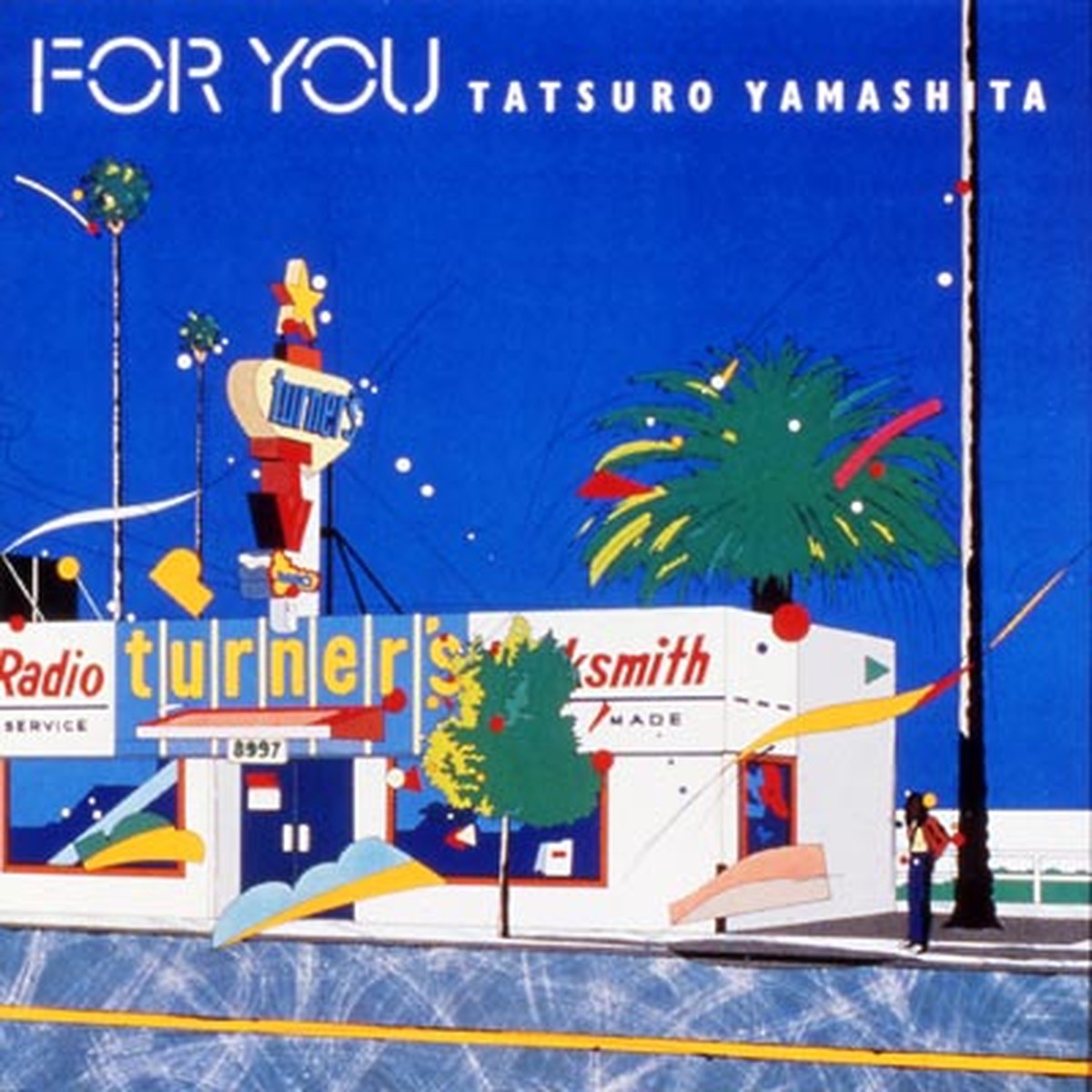 FROM THE TOKYO '83 ARCHIVETATSURO YAMASHITAFOR YOUAVAILABLE TO HUNTVIEW RECORD →
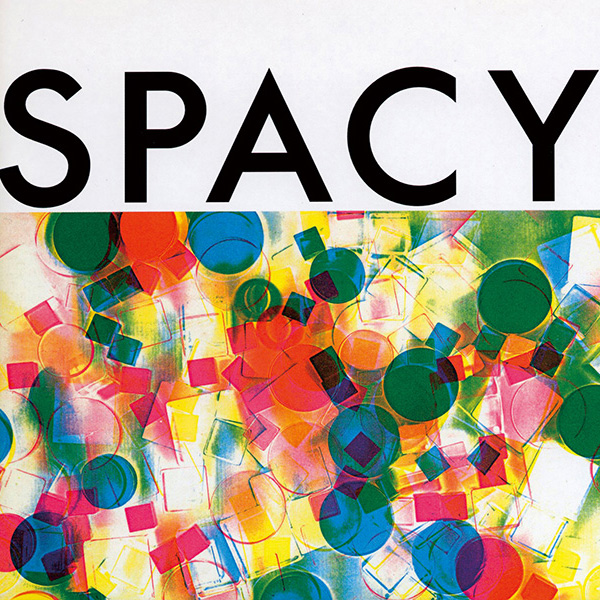 FROM THE TOKYO '83 ARCHIVETATSURO YAMASHITASPACYAVAILABLE TO HUNTVIEW RECORD →
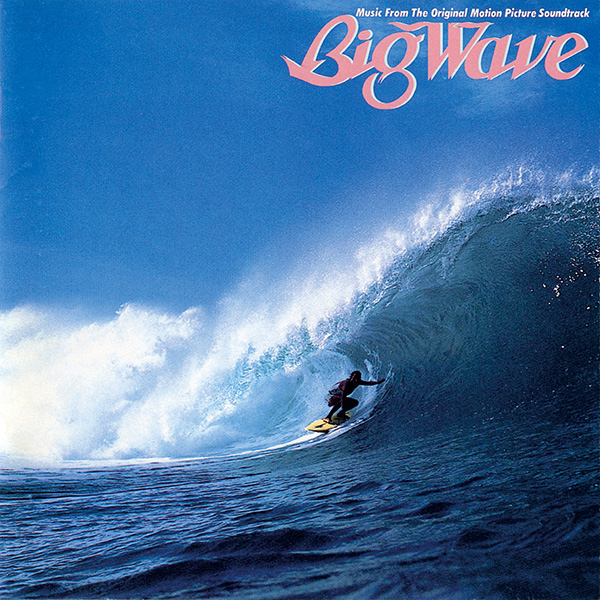 FROM THE TOKYO '83 ARCHIVETATSURO YAMASHITABIG WAVEAVAILABLE TO HUNTVIEW RECORD →
The Studio Was Part of the Instrument
Studios such as Onkio Haus mattered because they were not neutral spaces.
Rooms have acoustic personalities. Consoles behave differently. Engineers develop habits around particular machines. Musicians learn how hard they can hit a drum kit in one room and how quietly they can play in another.
Onkio Haus opened in Ginza in 1974 and became part of the fabric of Japanese commercial recording. Its own history connects the studio with a large amount of City Pop work, as well as recordings by artists such as Ryuichi Sakamoto.
When the same studios, engineers and musicians recur across different albums, you begin to understand why supposedly unrelated records can sound like they belong to the same city.
Not the same genre.
The same working culture.
The Arranger Is Often the Person You Should Be Following
If you want to understand why two Japanese records from the same period feel related, the artist name may be the least useful place to look.
Check the arranger.
The arranger decides where the record opens up, where it tightens, which harmony gets doubled, whether the saxophone enters before or after the vocal, whether the chorus gets bigger through volume or through orchestration.
Those decisions are often invisible until you start listening for them.
Then they become impossible not to hear.
This is also why credit-digging is such a useful way to explore Japanese music. Follow an arranger from one City Pop record into a fusion album, then into an idol record, then into an AOR session, and the usual genre boundaries start looking much less convincing.
Japanese Pressings Are Only Part of the Story
Japanese vinyl has a strong reputation among collectors, particularly for quiet surfaces and careful manufacturing.
That reputation is real enough to matter, but it can also become shorthand for something more complicated.
A quiet pressing is not necessarily the best mastering. A Japanese edition may sound cleaner while another country's version sounds fuller or more aggressive. Different cuts can emphasize different things.
For domestic City Pop, though, there is something satisfying about hearing music that was recorded, mixed, mastered and pressed within the same highly developed Japanese recording industry.
A clean original pressing can feel coherent in a way that is difficult to reduce to one technical reason.
Not magical.
Just very well made.
Why These Records Still Sound Modern
The strange thing about the best City Pop records is how little they need nostalgia.
The artwork may scream 1982. The instruments may include Rhodes piano, analog synths, chorus-heavy guitar and saxophone.
But the underlying decisions still feel current.
The low end is controlled. The stereo image is clear. Vocals sit naturally. Arrangements reveal detail without becoming exhausting.
A lot of music from the period sounds unmistakably old.
The best City Pop sounds like it happens to be old.
That is a meaningful difference.
Listen to What Is Missing
One of the best ways to understand the production is to pay attention to absence.
Notice the instrument that drops out before the chorus.
Notice when the bass suddenly simplifies.
Notice the four bars where the guitar stops playing altogether.
The best arrangements are often defined by what they refuse to add.
That restraint is easy to miss because City Pop is usually discussed as lush music.
It is lush.
But it is rarely careless.
Records Worth Hearing for the Production Alone
Taeko Ohnuki's SUNSHOWER is an obvious place to start because the arrangement and player interaction are so exposed. Tatsuro Yamashita's late-1970s and early-1980s records show how rapidly Japanese pop production was evolving. Japanese AOR and fusion from the same period often push the same ideas even further.
The useful question is not simply, “Does this sound good?”
Ask what is making it sound good.
Is it the bassline? The space around the vocal? The way the drums are recorded? The arranger deciding not to use strings until the final chorus?
Once you start listening that way, City Pop becomes much more interesting than a playlist category.
Final Thoughts
City Pop did not become one of the best-sounding corners of Japanese pop history because of a single machine, studio or production trick.
It happened because a lot of things aligned at once: better recording technology, highly skilled session players, ambitious arrangers, experienced engineers, major-label budgets and an audience willing to buy polished adult pop on a large scale.
That combination did not last forever.
The records did.
And beneath all the neon, summer highways and retro artwork, that may be the real reason people keep returning to them.
They were made extraordinarily well.