
 JUNKO OHASHI
POINT ZERO
1983 · ESSENTIALS
€74
JAPANESE ORIGINAL PRESSING · 1981
JUNKO OHASHI大橋純子
Ohashi's commanding voice glides across urbane boogie and sophisticated balladry, with Telephone Number turning a simple late-night call into one of Japanese pop's great entrances.
Released in 1981, TEA FOR TEARS marked Junko Ohashi’s first major step after the dissolution of Minoya Central Station and the beginning of a new phase as a solo artist. Produced by Kazuharu Honjo, the album surrounds Ohashi with polished AOR and adult-pop arrangements rather than the stronger band-funk emphasis of her earlier work. All of the lyrics were written by Yoshiko Miura, while composers including Takeo Sato, Yoshihiro Yonekura, Mitsuo Hagita, Yasuhiro Abe, and others contribute material with a remarkably consistent late-night tone. The album is especially notable for containing “Telephone Number,” later one of the central songs in Ohashi’s international rediscovery. In the context of the full LP, however, that track sits naturally beside “Another Day, Another Love,” “La Rosa,” “Maroon Person,” and the title song, revealing how broad her voice could be. Ohashi’s power remains unmistakable, but the arrangements often ask her to work with more restraint and nuance. TEA FOR TEARS is therefore an important transition: it keeps the soul strength of her Minoya years while placing it inside a more refined, urban AOR framework.
OTHERS ALSO VIEWED
JUNKO OHASHI1983 · ESSENTIALS
€74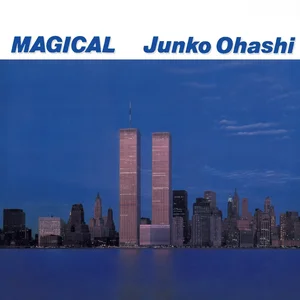 JUNKO OHASHI
1984 · ESSENTIALS
€58 KAZUHITO MURATA
1982 · ESSENTIALS
€52 JUNKO OHASHI
2021 · ESSENTIALS
€65 YASUHA
1981 · ESSENTIALS
€78 HITOMI TOHYAMA
1983 · ESSENTIALS
€84 YASUHA
1981 · ESSENTIALS
€70 MAKOTO MATSUSHITA
1981 · ESSENTIALS
€95 MEIKO NAKAHARA
1983 · ESSENTIALS
€75 EIICHI OHTAKI
1981 · ESSENTIALS
€55