ABOUT THIS ALBUM
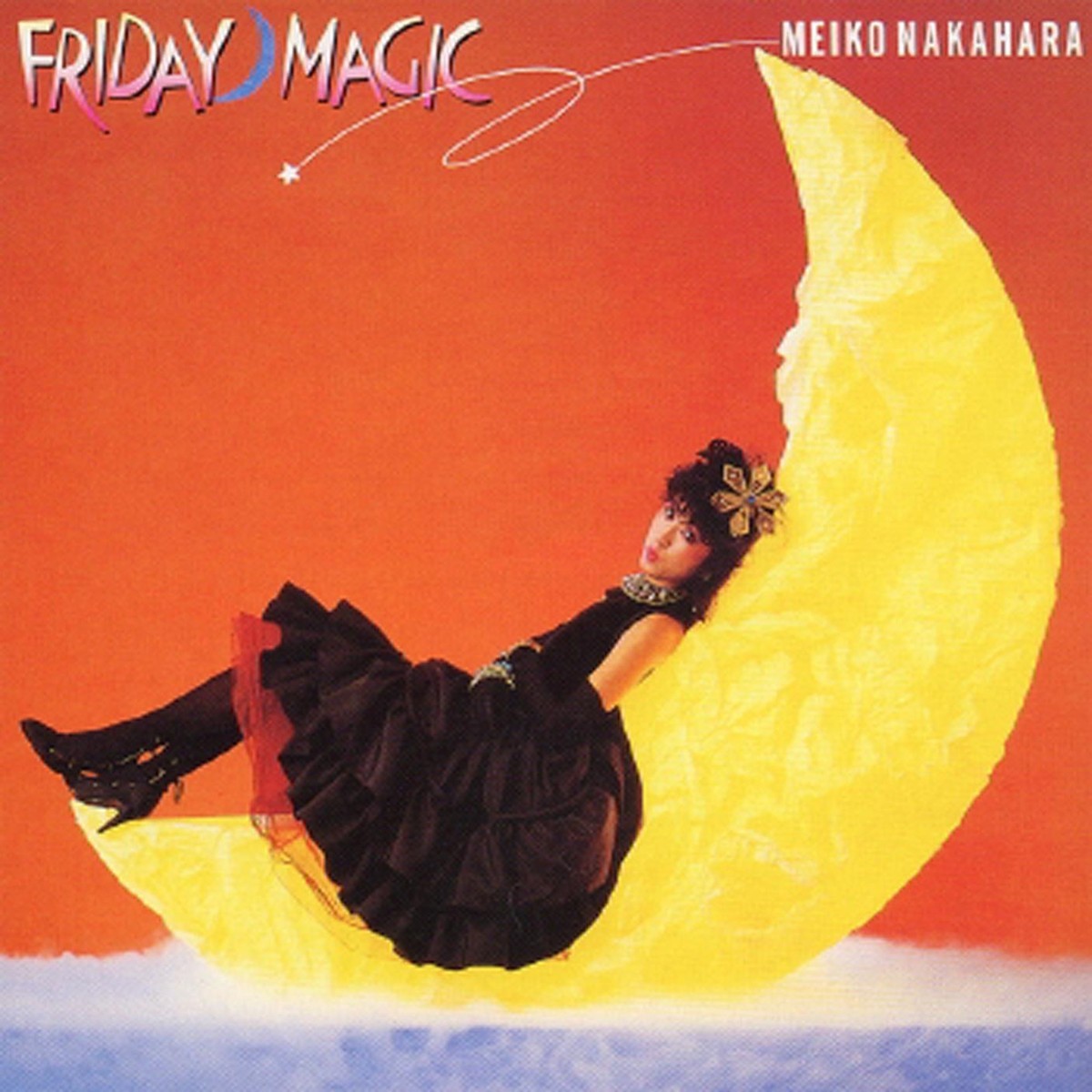
Released in December 1982, Meiko Nakahara’s second album, 2-ji Made no Cinderella – Friday Magic, catches the singer-songwriter at the point where the Latin pulse of her debut was being folded into a sharper studio-pop frame. It predates the broader breakthrough of “Kimitachi Kiwi Papaya Mango da ne,” yet the compositional identity is already complete: Nakahara wrote and composed all ten songs, moving from extrovert dance music to intimate, after-hours AOR without losing her instinct for direct hooks. In the landscape of 1982 Japanese pop, the album sits productively between kayōkyoku melody, session-built AOR, disco and what listeners now group under Japanese city pop and Japanese boogie. Its sequencing matters: the bright velocity of Side A gradually gives way to the nocturnal emotional shading of Side B, ending with the title’s Cinderella image rather than another peak-time number. Later overseas interest focused especially on “Fantasy” and “Friday Magic”; their inclusion was foregrounded again when the album returned to Japanese vinyl in 2022.
INSIDE THE SOUND
The record’s lift comes from contrast rather than one fixed groove. “Fantasy” opens with a tight, fast disco pulse, bright brass and layered backing voices; “Coconuts no Kataomoi” turns toward samba-inflected motion; “Go Away” widens the harmony into a smoother Philadelphia-soul shade. Across the album, bass, drums and percussion stay active without crowding Nakahara’s melodies, while keyboards connect the rhythm section to the horn and string colours above it. Hiroshi Shinkawa’s arrangements are polished but rarely static: short breaks, answering phrases and changes in density keep the songs moving. The result is danceable, but more arranged than loop-driven—Japanese boogie built with the dramatic timing of pop songwriting.
PLAYERS & PRODUCTION
Shinkawa provides the album’s central arranging language. Ichiro Nitta supplied the brass-section arrangements for “Coconuts no Kataomoi” and “Friday Magic,” while Kazuo Shiina handled the synthesizer orchestration on “Suteki na Jajaumanarashi.” The credited session pool includes Shiina, Masaki Matsubara, Shigeru Suzuki, Koki Ito, Jun Aoyama, Hideo Yamaki and percussionist Nobu Saito. Jake H. Concepcion and Shin Kazuhara add horn colour; EVE appear among the backing vocalists, and Keishi Urata is credited with synthesizer programming. It is a deep early-eighties Tokyo studio cast, used in service of Nakahara’s own writing rather than as display.